Kalpavriksh is the Social Development and CSR Implementation Wing of Basal Initiative Pvt. Ltd., working with rural, tribal and marginalised communities across Eastern and North-East India to strengthen food security, livelihoods, water access, natural resources and grassroots governance.
Institutional structure, registration identity, and core thematic mandate.
Social Development & CSR Implementation Wing of Basal Initiative Pvt. Ltd. Registered under the Societies Registration Act XXI of 1860.
Founded with watershed and natural resource interventions in Odisha's tribal heartland; now working across 12 states over 20+ years.
Food Security, Natural Resource Management, Water Access, Farm & Non-Farm Livelihoods, and Grassroots Governance.
Odisha, Chhattisgarh, Jharkhand, Bihar, West Bengal, and the Seven Sister States of North-East India.
Mobilised through 1,500+ Village Organisations, SHGs, and Farmer Producer Organisations, with 70% ST/SC participation.
Fully documented statutory filings from Kalpavriksh registration, PAN, TAN, 12AA, and 80G records.
Two social-enterprise brands convert grassroots skill into market access, fair income and reportable CSR impact.
"Where thread becomes adornment, and weaving becomes dignity."
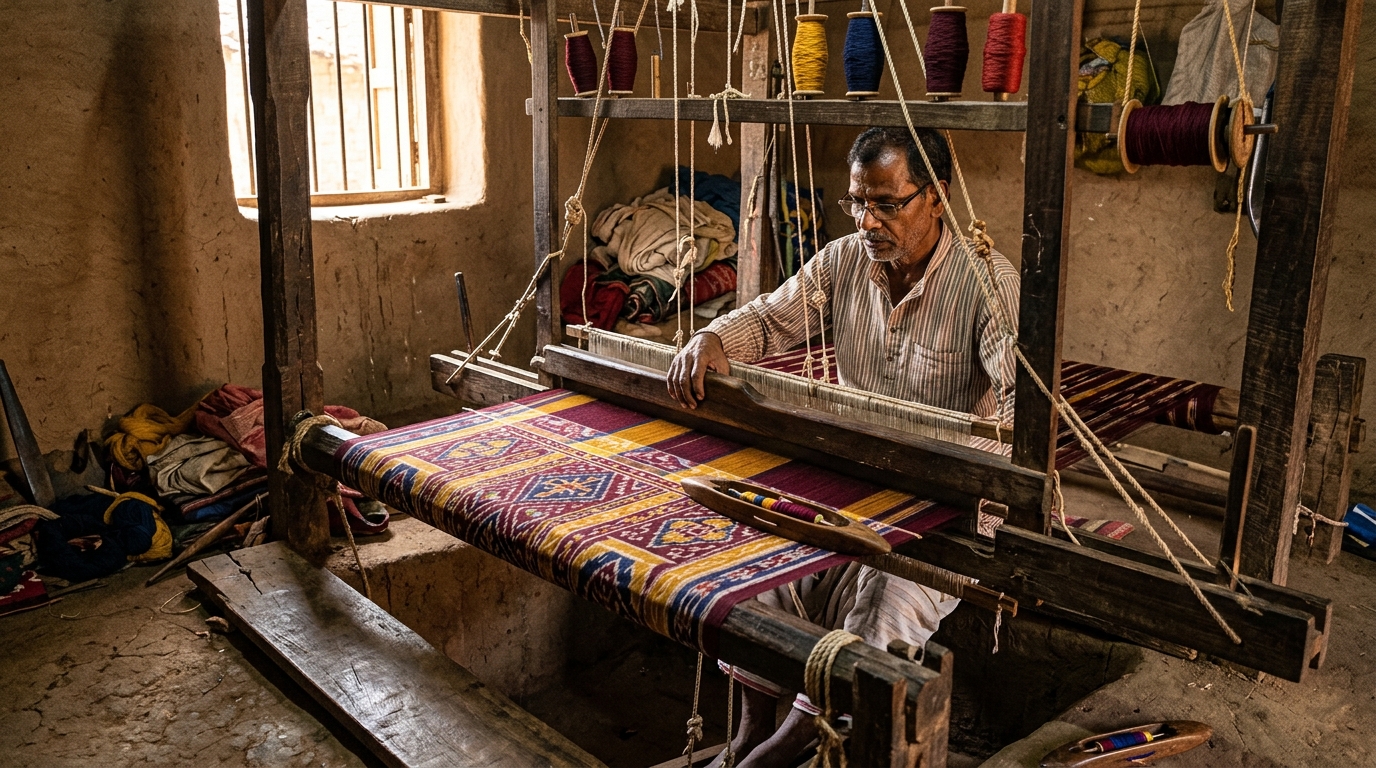 Weaver & Artisan Clusters · Sambalpuri Ikat
YarnAbhusan brings the handlooms and handicrafts of Eastern India and the Northeast to buyers who value provenance, fair pricing and the hands behind every piece. Authentic handmade textiles and crafts with verified origin, maker-centred storytelling, design support and fair terms for artisans.
"Farm-made, not factory-made. Owned by the hands that grow it."
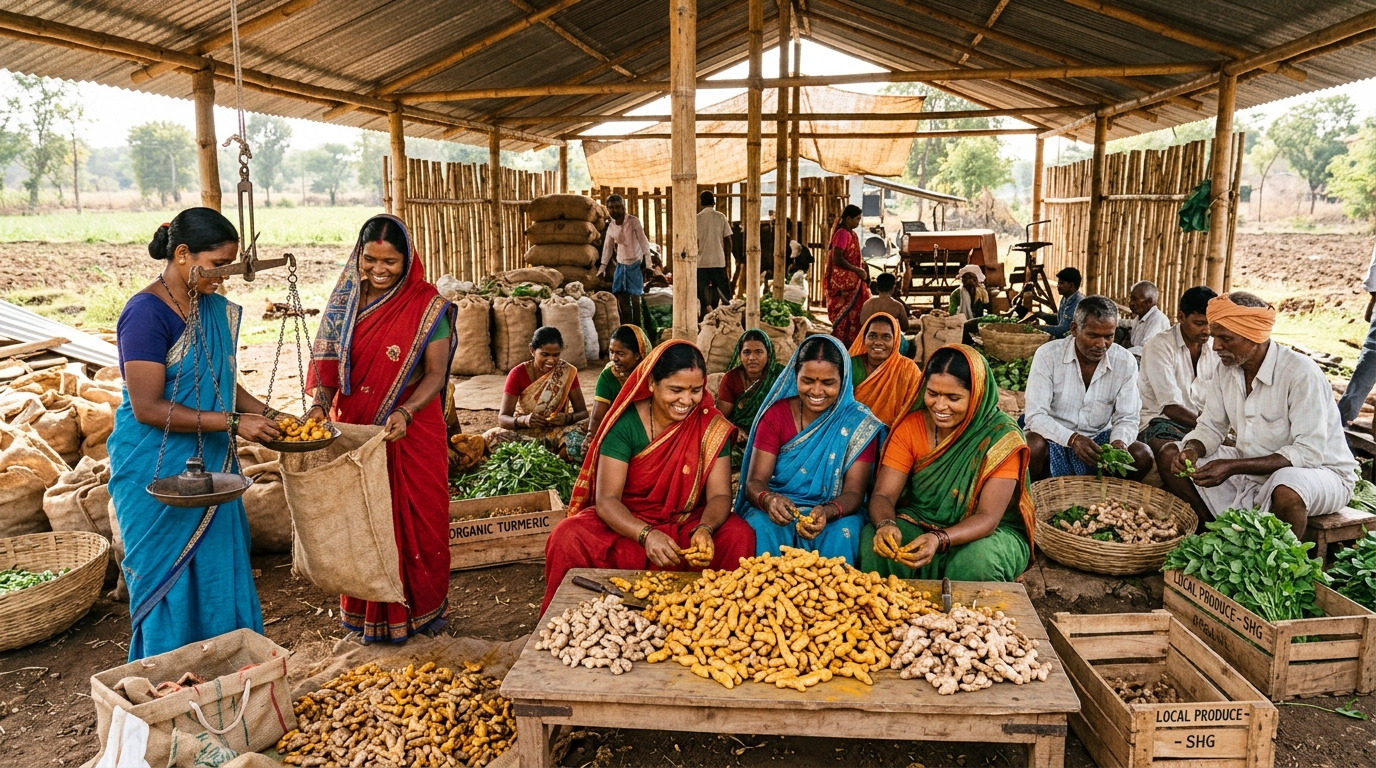 Village Post-Harvest VAS · Organic Produce
FarMade brings agri-commodities, fresh vegetables and fruits from local farms to the shelf, with sorting, grading, processing and packing owned at village level. A farm-to-shelf brand where value-added services are performed by SHGs and FPOs, keeping more margin with farming communities.
Waste, ReMeDi Clinic and WASH turn CSR and donor support into community-owned systems, durable livelihoods and measurable outcomes.
 4Rs Circular Village Model
"Waste is not the problem. Wasted waste is."
Kalpavriksh builds circular waste systems where they must work: in villages, wards and households across Eastern India and the Northeast. Combining source segregation, MRFs, composting, and biogas with SBM 2.0 and Mission LiFE.
 Phygital Village Health Center
"A doctor is 40 kilometres away. The illness is not."
The ReMeDi Clinic brings qualified doctors, diagnostics, medicines and digital records to remote villages through locally run phygital clinics. Connecting patients to physicians in real time and creating sustainable health entrepreneurship.
 Safe Water & Sanitation
"A tap was installed. A toilet was built. But did the habit stay?"
Kalpavriksh makes WASH stick by combining infrastructure, behaviour change, community ownership, upkeep and proof that the change endured. Convergence with Jal Jeevan Mission, SBM, and school health norms.
Kalpavriksh is a community development organisation committed to the social and economic empowerment of rural, tribal and marginalised populations across Eastern and North-East India. As the not-for-profit and social-impact wing of Basal Initiative Pvt. Ltd., we pair deep social-sector experience with the technical and implementation discipline of a modern development enterprise.
For two decades, we have partnered with governments, CSR funders, multilateral agencies and communities themselves to convert policy and funding into measurable change at the last mile — securing food, water, income and a stronger voice for households at the very end of the development chain.
Kalpavriksh began with watershed and natural-resource work in Odisha's tribal heartland. Over twenty years, that early focus has grown into a multi-thematic implementation organisation delivering government and donor-funded programmes in livelihoods, water and sanitation, health, skilling and grassroots governance.
A self-reliant rural and tribal India where every household has secure food, clean water, dignified income and an empowered voice in shaping its own future.
To design and implement sustainable, community-owned development programmes that strengthen livelihoods, protect natural resources and build local institutions — with a deliberate focus on the most vulnerable.
Interconnected domains built for community resilience and long-term self-reliance.
Strengthening household and community food systems through improved agriculture, kitchen gardens, grain banks and nutrition awareness.
Protecting and regenerating land, forests and soil through watershed development, afforestation and community-managed commons.
Ensuring reliable drinking water and irrigation through water harvesting, source sustainability, sanitation and community water governance.
Building dignified, diversified incomes through farm and non-farm livelihoods, skilling, enterprise promotion, and market and credit linkages.
Empowering communities to claim rights and entitlements by strengthening local institutions, panchayat engagement and access to schemes.
Improving preventive health awareness, community screening, nutrition practices and access to essential health support.
Kalpavriksh designs and delivers multi-thematic development programmes for rural, tribal and marginalised communities.
Soil and water conservation, land treatment, water harvesting and livelihood integration for climate-resilient village ecosystems.
Flagship work with tribal communities to improve income, strengthen institutions and support self-reliance.
Decentralised support hubs for community institutions, village organisations and local development programmes.
Community health, screening, awareness and preventive health initiatives for stronger rural wellbeing systems and families.
Training under national skilling programmes and local livelihood-readiness initiatives for employment and enterprise pathways.
Drinking water, sanitation, hygiene behaviour change, community water governance and solid waste management systems for cleaner settlements.
Kalpavriksh concentrates its work where exclusion and need are deepest — across Eastern India and the Seven Sister states of North-East India. Built for difficult geographies and last-mile trust.
This regional focus gives Kalpavriksh cultural fluency, established community relationships and the field presence required for credible, large-scale implementation across rural, tribal and marginalised communities.
Our programmes are designed for India's most vulnerable and underserved groups.
~70% ST / SC Participation: Around 70% of the individuals we work with belong to Scheduled Tribe and Scheduled Caste communities from the economically weakest sections of rural and tribal India. Our work is deliberately concentrated where development most often fails to reach — ensuring those left behind are reached first.
Kalpavriksh's work directly advances ten United Nations Sustainable Development Goals.
We follow a community-led, institution-building model designed for lasting impact.
Participatory needs assessment and resource mapping with the community.
Strengthen or form SHGs, FPOs, village organisations and user committees.
Training, skilling and handholding for households and local institutions.
Deliver programmes and connect communities to schemes, markets and finance.
Transfer ownership to local institutions so that impact continues after project completion.
Small and marginalised producers can earn more when they own and operate enterprises of their own.
Our methodology builds collective ownership, enterprise discipline, market access and lasting confidence through connected community pathways. Outcome: Communities move into self-managed, surplus-generating enterprises with capability and control over their future.
When small producers pool resources, they unlock scale — stronger bargaining, low-interest finance, technology and shared infrastructure.
Infusing traditional artisan and farming cooperatives with modern governance, digital bookkeeping, and quality standards.
Using initial CSR grant capital strictly to build revenue-generating assets and cash reserves that sustain ongoing operations.
Direct linkage to institutional buyers, modern retail and B2B aggregators without margin-eroding middlemen.
Kalpavriksh is guided by experienced leadership and a volunteer governing board that provide strategic direction, institutional oversight and field accountability.
Social entrepreneur and development professional with cross-sector experience spanning agribusiness, rural development, healthcare access, livelihood promotion and sustainability-driven enterprise. Leads strategy, partnerships, programme design and institutional growth.
Development sector professional with extensive experience in programme implementation, stakeholder coordination, rural development, health outreach, social mobilisation and capacity building. Oversees programme execution and operational management.
Brings strong field experience across livelihoods, natural resource management, WASH, agriculture and community development initiatives. Leads field operations, programme monitoring, community mobilisation and execution strategy.
Leads financial governance, institutional compliance, audit management, grant administration, budgeting and donor reporting. Safeguards transparency, accountability, internal controls and long-term financial stewardship.
Experienced development professional with 26+ years of expertise in livelihood promotion, community development and program management. Leads large-scale development projects and strengthens community institutions.
A volunteer governing board provides strategic direction, institutional oversight and policy guidance.
As the social-impact wing of Basal Initiative Pvt. Ltd., Kalpavriksh draws on appropriate technology, agri and clean-energy expertise, and a results-driven delivery culture.
Credible, on-ground implementation across Eastern and North-East India since 2004.
Deliberate focus on ST/SC communities, women and economically weakest households.
Transparent reporting, independent verification and SDG-aligned impact metrics.
A trusted bridge between funding and the communities most often left behind.
Access to technical depth in AgriTech, Renewable Energy and Energy Efficiency.
For CSR funders, government agencies, development institutions and community partners seeking credible last-mile implementation.
Share your organisation details, target region and project brief. Direct routing to our partnership desk.
Bring credible last-mile implementation to communities that need it most.